
The Peculiar Truth about Hemingway’s Plane Crashes

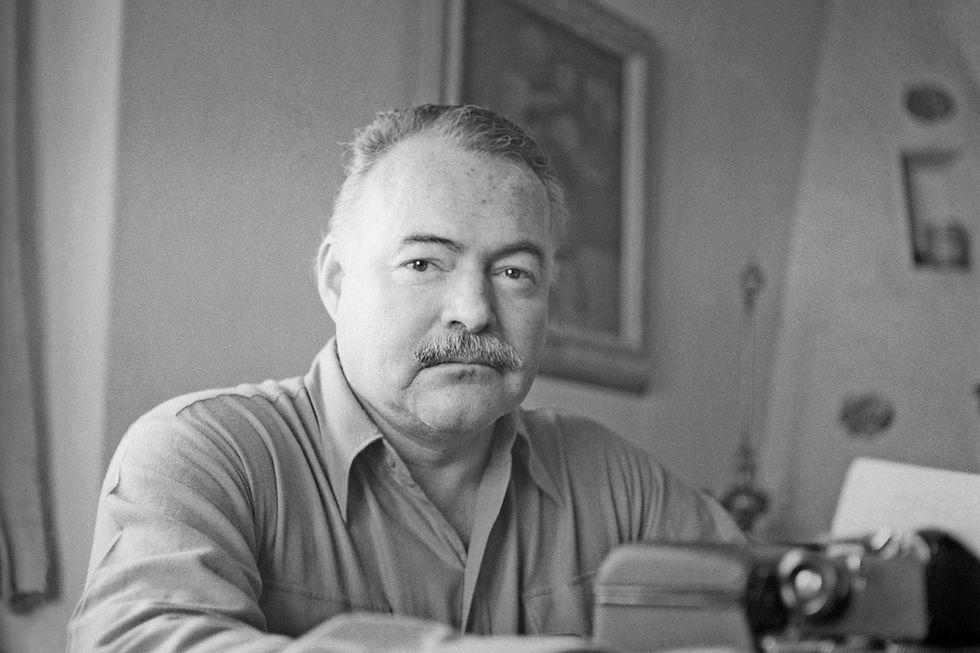
January 25, 1954: A chartered Cessna 180 flew over a remote jungle region to Murchison Falls near Lake Albert. On its return trip from sightseeing the plane was due to refuel in the small Ugandan town of Masindi.
But when the aircraft didn’t arrive as scheduled, a search commenced for the single-engine bush plane.
Aside from the pilot and a local guide, the only other passengers onboard were Mr. and Mrs. Ernest Hemingway.
Fears grew that the world famous author was lost in the dangerous African jungle, possibly dead from an airplane crash.
Less than a year earlier, Hemingway was awarded the Pulitzer Prize for Fiction for his novella The Old Man and the Sea. He had been writing American literature since the early 1920s and had never before received any previous awards for his books. Many of his earlier novels are considered classics, including For Whom the Bell Tolls, The Sun Also Rises, and A Farewell to Arms which was largely based on his life as an ambulance driver in Italy in World War I.
During the Second World War and the Spanish Civil War, he became a war correspondent. His writing from overseas appeared regularly in Collier’s Magazine.
During the Thirties, he had a long affair with fellow war correspondent Martha Gellhorn. They were wed in 1940.
Their marriage barely lasted for the length of the war, though. She wanted to keep reporting from the field and he wanted her at his side. Their divorce was finalized in December 1945.
Three months later, Hemingway married his fourth wife, Mary Welsh. She was with her adventurous husband aboard the Cessna when it disappeared in the Ugandan jungle.
Among the searchers for Hemingway’s lost plane was Capt. RC Jude, a pilot with British Overseas Airways. He spotted the downed aircraft and could clearly see the tail number.
The Cessna showed minimal damage, just a broken wheel, which suggested the pilot had landed safely. The occupants could have walked away and survived. Yet there were no signs of life at the landing site. So where were they?
Hemingway was no stranger to Africa. In 1936, Esquire magazine published one of his best known short stories, The Snows of Kilimanjaro, based on his safari trips. The local guide aboard the Cessna was also familiar with the terrain.
The four stranded travelers spent the night in the bush. Mary Hemingway had sustained cuts and bruises. Ernest suffered the same as well as a mild concussion.
By morning, they discovered they were only a quarter of a mile from Lake Albert and made their way to the shoreline. A tourist boat en route to Murchison Falls spotted the four plane survivors. They were taken aboard the ship with minor injuries. Hemingway and company were dropped off at a location on land further up the lake shore where a rescue aircraft awaited them.
But on takeoff that plane crashed, too. Again, everyone walked away with minor injuries.
They then wisely traveled back across Uganda by car.
That trip had a profound effect on Hemingway. He contemplated his mortality in a manner the world adventurer had never considered before. His depression, paranoia, and alcoholism increased, and he was later declared bipolar. Whether or not the twin plane crashes contributed to the author’s deepening mental health issues is unknown.
Ernest Hemingway spent his remaining seven years fishing and sailing around Cuba and never published another book during his lifetime.


Comments